|
|
|
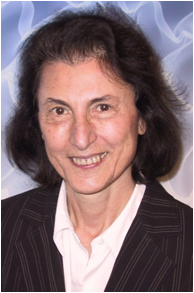
Sharmin Abdullah
Email: sabdul9-at-gmu.edu
Assistant Professor
College of Science
Dept. Computational and Data Sciences
George Mason University
|
She received her Ph.D. in Computational Science from The University of Texas at El Paso (UTEP). Her research focuses on computational materials science, high-performance computing, and data-driven modeling. She has experience with large-scale molecular dynamics simulations using LAMMPS, density functional theory–based energy calculations with VASP, and post-processing analysis through OVITO and machine learning. Her work has been supported by UTEP, the U.S. Department of Energy (DOE), Sandia National Laboratories, Lawrence Berkeley National Laboratory, National Science Foundation (through NSF ASPIRE program), GMU and computing resources provided by the Texas Advanced Computing Center (TACC) and other NSF- and DOE-supported platforms.
|
|
|
|
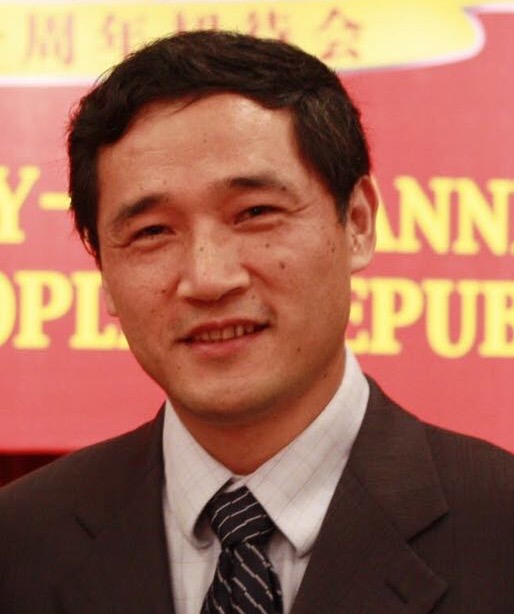
Estela
Blaisten-Barojas
Professor and CSM Director
Department of Computational and Data Sciences
College of Science
George Mason University
Email: blaisten-at-gmu.edu
|
My research focuses on computational intensive simulations and microscopic modeling of the thermodynamics, structure,
and dynamics of semiconductor, covalent, metallic, and van der Waals clusters
(aggregation and growth, melting, wetting, metallic-non-metallic transitions,
clusters deposited on surfaces, sintering, nanophase materials, structured
materials, polymer degradation). Molecular Dynamics, MonteCarlo and cellular
automata simulations. Correlated walks, self-avoiding walks and their
applications to solid state phenomena such as self diffusion, impurity motion,
growth and form, helix-coil transition, conformational transitions in
macromolecules, systems with reflecting and absorbing boundaries. Molecular
orbital-electronic structure calculations of ionic complexes and metals to
produce potential energy functions. Phonon-molecule, libron-molecule, and
electron-hole pairs-molecule interactions applied to processes in condensed
phases. Publications
|
|
|
|
Jim X. Chen
Email: jchen-at-gmu.edu
Professor
Volgeneau School of Engineering
Dept. Computer Science
George Mason University
|
Jim X. Chen received his Ph.D. in Computer Science from the University of Central Florida in 1995 and joined the Computer Science Department at GMU. He received honorary professorships from Fudan University, Central South University, Southwest Jiaotong University, Beijing Jiaotong University, Hoseo University, and the University of Electronic Science & Technology of China. He is Editor-in-Chief of AIP/IEEE Computing in Science & Engineering (CiSE). On consulting basis, his research interests include computer graphics, virtual reality, visualization, networking, and simulation. His research has been funded by Dynamic Animation Systems, Inc. (Real-time Fluid Simulation), Inova Fairfax Hospital (Virtual Knee Anatomy), National Science Foundation (VR Testbed for Research and Teaching), Link Foundation (New Graphics Pipeline), MGB Ltd. (Data Visualization), DARPA (Security Data Visualization), National Institutes of Health (Dynamic Web-based Visualization), US Department of Education (Virtual Immersive Science Education), National Research Council (Lessons from History), and US Department of Defense (Networked Virtual Environment).
|
|
|
|
Maria Emelianenko
Email: memelian-at-gmu.edu
Professor
Dept. of Mathematical Sciences
College of Science
George Mason University
|
My research is in the area of applied mathematics with main focus on scientific computing and
development of efficient models and numerical algorithms. In particular, I'm
interested in developing predictive models for microstructure evolution in
polycrystalline materials, such as metals, ceramics or semiconductors, which
play important role in modern nanotechnology and other engineering applications.
While the structure of these materials is determined by microscopic properties,
the interplay between these elements determines macroscopic behavior. Analysis,
modeling and simulation of these complex multiscale phenomena is performed with
the help of the tools ranging from the theory of PDEs, statistical physics to
stochastic analysis and probability theory as well as various simulation
techniques. Other directions of research include design of fast new algorithms
for quantization and clustering with the use of the concepts like centroidal
Voronoi tessellations, optimization of phase diagrams calculation for complex
multicomponent materials and mathematical models in biology.
|
|
|
|
Igor Griva
Email: igriva-at-gmu.edu
Associate Professor
Dept. of Mathematical Sciences
College of Science
George Mason University
|
My research involves developing new primal-dual algorithms for nonlinear constrained
optimization, their mathematical analysis, efficient implementation and
application to problems in computational learning, radiation treatment planning,
power generation and transmission. Optimization based computational analysis
also includes investigation of light enhancement and propagation in
nanostructures and estimation of electron transfer rates in proteins and
molecular wires.
|
|
|
|
Robert Handler
Email: rhandler-at-gmu.edu
Retired Professor
Department of Mechanical Engineering
Volgeneau School of Engineering
Affiliate Professor
Department of Computational and Data Sciences
College of Science
George Mason University
|
Robert A. Handler received his Ph.D. in mechanics from the University of Minnesota (1980). He is currently the Director of the Graduate Program of the Ddepartment of Mechanical Engineering. Previously, he was Professor of Mechanical Engineering at Texas A&M University, Senior Lecturer in Aerospace Engineering at the University of Texas-Austin, Visiting Scholar at Brown University, and Research Mechanical Engineer at the U.S. Naval Research Laboratory (NRL). At NRL he was head of the Fluid Dynamics Section in the Remote Sensing Division. He has been active in computational, theoretical, and experimental fluid mechanics throughout his 38 years of government and academic experience. Research areas in which he has participated include: direct and large eddy simulations of turbulent flows, turbulent transport physics, air-sea interfacial dynamics, surface thermal (infrared) imaging of the air-water interface, breaking wave dynamics, surfactant effects on free surface flows, first principles understanding of polymer drag reduction and riblet drag reduction, atmospheric boundary layer flows, hydroacoustics, physics of coastal and estuarine flows, and applications of Karhunen-Loeve methods to turbulent flows. Recently he has been involved in NSF funded research of chaotic low Reynolds number flows of dilute polymer solutions. He has published more than 100 journal articles, conference proceedings, books, and theses, and has served on the editorial board of the International Journal of Non-Linear Mechanics.
|
|
|
|
Saleet Jafri
Email: sjafri-at-gmu.edu
Professor
School of Systems Biology
College of Science
George Mason University
|
Using computational modeling to study the molecular and cellular basis of disease, including cellular signaling, calcium dynamics, cardiac excitation-contraction coupling, mitochondrial signaling and energy metabolism, muscle and muscle pathologies, and t-lymphocyte signaling.
|
|
|
|
Jason Kinser
Email: jkinser-at-gmu.edu
Associate Professor
Depatment of Computational and Data Sciences
College of Science
George Mason University
|
My research interests are focused on image processing, multi-domain data, pulse images that have
possible detection, identification, and prediction applications in materials
having different compositions.
|
|
|
|
Dmitri Klimov
Email: dklimov-at-gmu.edu
Professor
School of Systems Biology
College of Science
George Mason University
|
My research interests are focused on two areas of computational study of protein aggregation and
unfolding. The first is focused on the assembly of Abeta amyloids, which cause
Alzheimer's disease. The second involves the computational investigation of
forced (mechanical) unfolding of proteins. The proposed research program is
based on the all-atom molecular dynamics (MD) simulations of proteins or
peptides in explicit solvent. Both topics are highly important for understanding
the molecular aspects of Alzheimer's disease and mechanical functions of
proteins in living organisms.
|
|
|
|
Qiliang Li
Email: qli6-at-gmu.edu
Professor
Dep. of Electrical and Computer Engineering
Volgeneau School of Engineering
George Mason University
|
Qiliang Li joined the faculty of George Mason University as an Assistant Professor of Electrical and Computer Engineering in 2007, and promoted to Associate Professor in 2012. He received the honor of Virginia Microelectronics Consortium Professorship in 2007. He received NSF CAREER Award in 2009, Mason Emerging Researcher/Scholar/Creator Award in 2011 and the VSE Rising Star Award in 2011. He has worked on molecular electronics, nanoelectronics, solar cell, ferroelectric memory and magnetoresistance devices. He authored or coauthored more than 60 technical papers and has two U.S. patents. Current research interests are on: Two-Dimensional Materials and Devices, Nanowire Field Effect Transistors, Topological Insulators, Novel Flash Memory Devices and Circuits.
|
|
|
|
Tim Sauer
Email: tsauer-at-gmu.edu
Professor
Dept. of Mathematical Sciences
College of Science
George Mason University
|
Dynamical systems and numerical analysis and its application to the sciences. Attractor
reconstruction, which is principal technique used in the analysis of chaotic
data from laboratory experiments. Implementation of reconstruction techniques.
Essential concepts of probability-one in infinite dimensions. Signal processing
on chaotic attractors through noise reduction and forecasting techniques.
Solution of systems of several nonlinear equations, numerical methods for
eigenvalue and generalized eigenvalue problems, computational methods in
dynamical systems , numerical methods for the calculation of the fractal
dimension of chaotic attractors, and theoretical questions on planar dynamical
systems.
|
|
|
|
John Schreifels
Email: jschreif-at-gmu.edu
Associate Professor
Dept. of Chemistry
College of Science
George Mason University
|
John A. Schreifels received his BS in 1975 and PhD in 1979 from the University of South Florida
in Tampa. After one and a half years of postdoctoral research, he joined the
faculty at the University of Missouri-St. Louis as an Assistant Professor. In
1988 he became an Associate Professor at George Mason University. He has worked
for over 25 years in the field of surface science. His research interests are in
the area of solid surface interactions with gases and liquids using Auger and
Photoelectron Spectroscopies along with Temperature Programmed Desorption
techniques. Dr. Schreifels is a member of the American Chemical Society and the
American Vacuum Society.
|
|
|
|
Amarda Shehu
Email: amarda-at-cs.gmu.edu
Professor and Co-Director of CSM
Department of Computer Science
Volgeneau School of Engineering
George Mason University
|
Shehu's research contributions are in biomaterials, specializing in computational structural biology, biophysics, and bioinformatics with a focus on issues concerning the relationship between sequence, structure, dynamics, and function in biological molecules. Her research on probabilistic search and optimization algorithms for protein structure modeling is supported by various NSF programs, including Intelligent Information Systems, Computing Core Foundations, and Software Infrastructure. Shehu is also the recipient of an NSF CAREER award and a Jeffress Memorial Trust Award.
|
|
|
|
Howard Sheng
Email: hsheng-at-gmu.edu
Associate Professor
Department of Physics and Astronomy
College of Science
George Mason University
|
Dr. Sheng's research interest focuses on understanding the structure and property relationships
of metastable materials, such as metallic glasses and nano-structured materials.
Materials as such are characterized by their lack of long-range atomic
periodicity (as in metallic glasses) or by their high degrees of defects (as in
nano-structured materials). Owing to their unique structural features, these
emerging materials exhibit unusual physical properties and play an important
role in advanced technologies. Currently, Dr. Sheng's research area covers
several challenging topics on the frontier of metastable materials research: (1)
Atomic-level structural analysis of amorphous materials; (2) Phase transitions
in glasses and liquids; (3) Properties and their atomistic mechanisms of
metastable materials. His research endeavors involve extensive computer modeling
and simulation of materials, varying from first-principles calculations based on
quantum mechanics to large-scale classical molecular dynamics to continuum
analysis. In addition to computer simulation, Dr. Sheng's research incorporates
state-of-the-art structural characterization employing synchrotron X-ray
diffraction conducted at Advanced Photon Source. His research goal is to develop
new computational algorithms and approaches to effectively deal with difficult
problems in materials research, to understand fundamental issues in materials
science, and to design new materials of scientific and technological importance.
|
|
|
|
Erhai Zhao
Email: ezhao2-at-gmu.edu
Professor
Department of Physics and Astronomy
College of Science
George Mason University
|
My research focuses on superconducting materials and quantum transport in mesoscopic and
nanoscale heterostructures. I have a persistent interest in superconductors
driven out of equilibrium, especially in spatial inhomogeneous systems. Modeling
and understanding their dynamics require techniques in quantum field theory and
nonequilibrium statistical mechanics. The research is driven by the spectacular
success of fabricating superconducting nanostructures and circuits for
electronic, spintronic, as well as quantum computing applications. More broadly,
we investigate the transport properties of mesoscopic to nano-devices based on
correlated heterostructures. Other interests include strongly correlated
superconductors, which refer to superconducting and related phases arising from
lattice systems with strong local repulsive interaction (doped Mott insulators),
and topological superconductors. These are primarily motivated by ongoing
experiments in transition metal oxides and doped topological insulators.
|
|